
Signals
Review what DeepMem noticed
Signals group local memory into preferences, decisions, procedures, insights, and next steps. Each one keeps evidence visible so you can confirm, correct, save, or dismiss it.
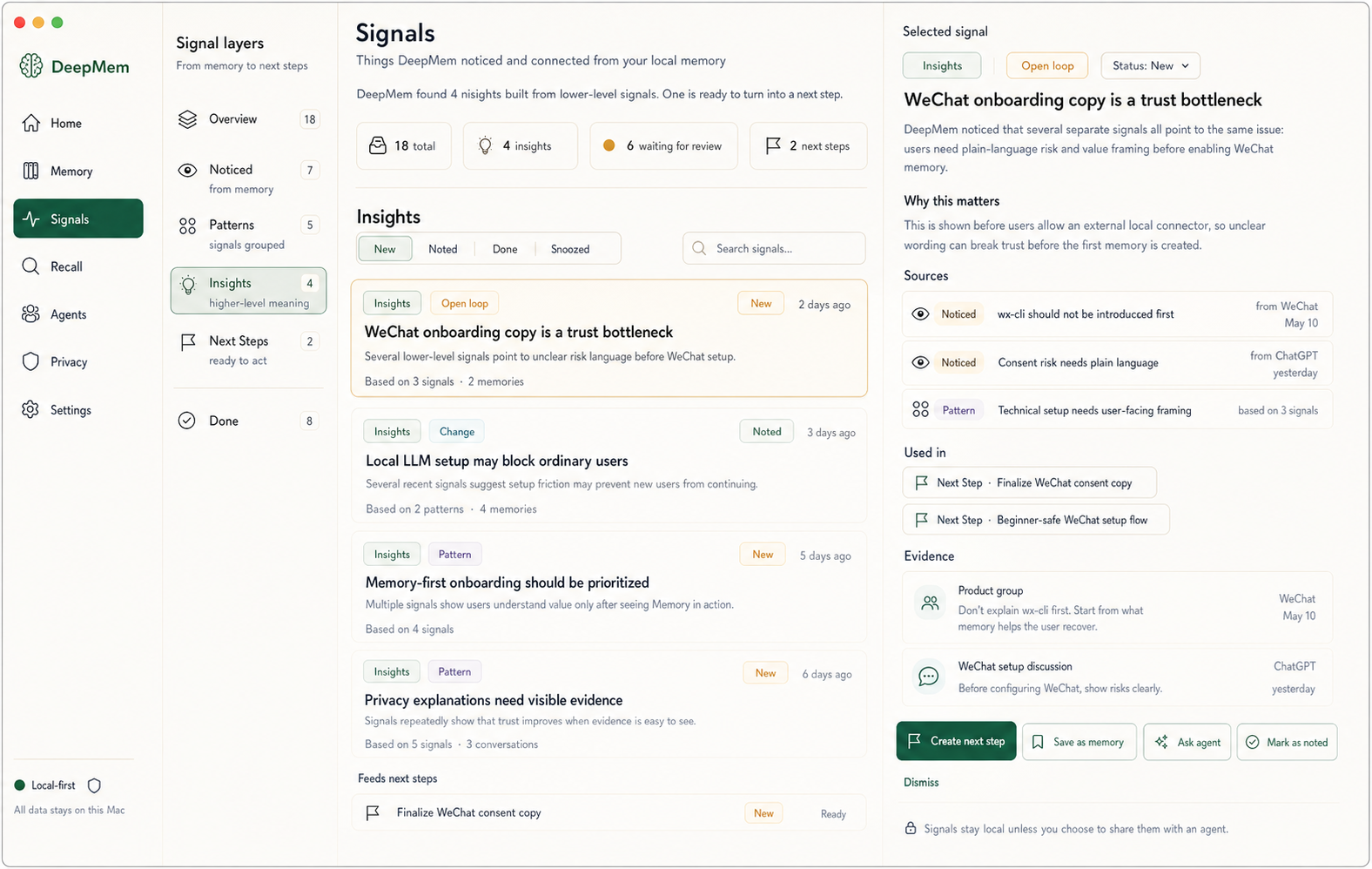
DeepMem brings important digital traces back to your computer, helps you review evidence-backed signals, and lets agents use only the memory you approve.
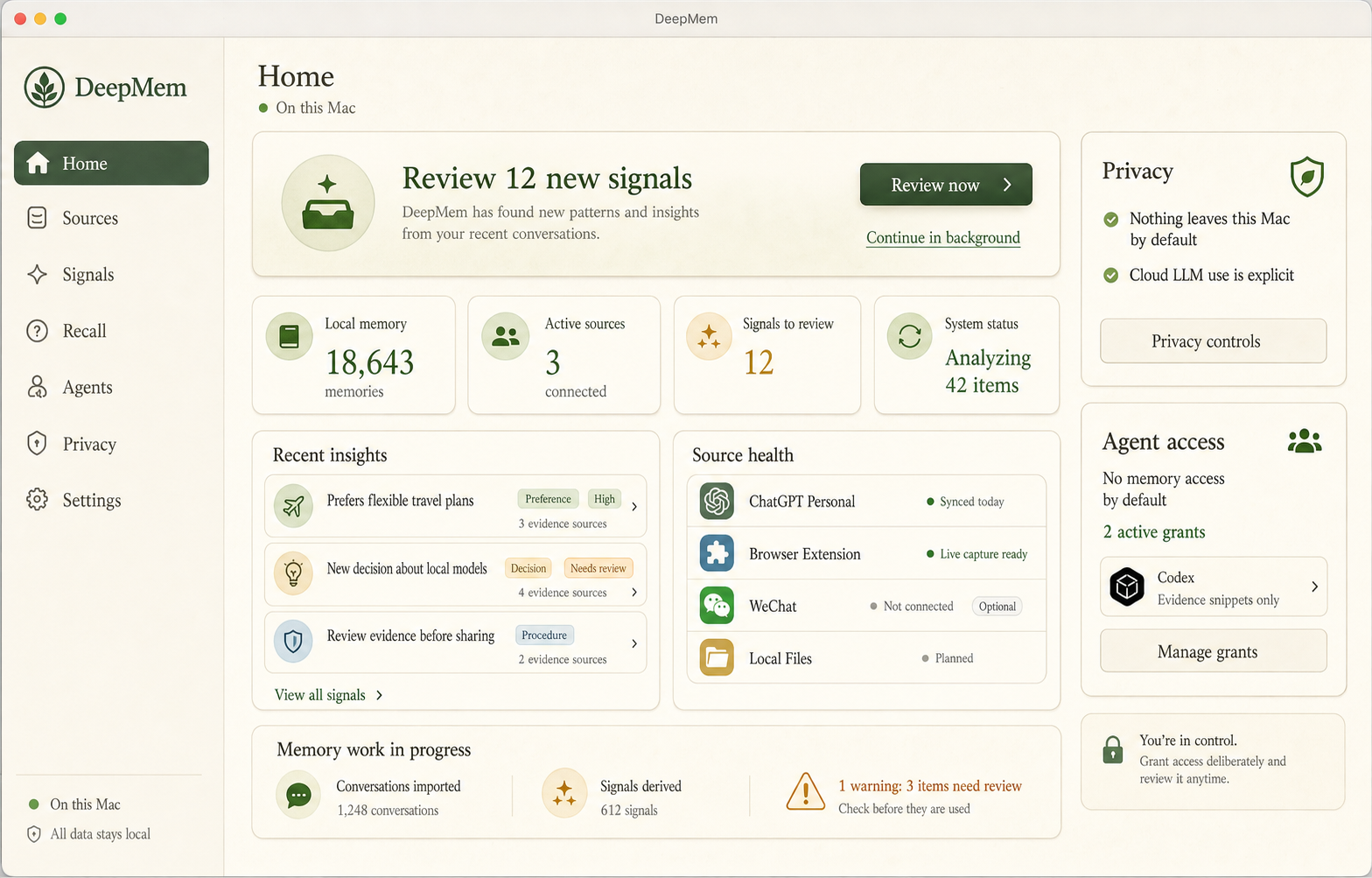
The latest DeepMem App design centers on three everyday surfaces: Signals for what DeepMem noticed, Recall for asking your past, and Agent Grants for sharing only the right context.
Signals group local memory into preferences, decisions, procedures, insights, and next steps. Each one keeps evidence visible so you can confirm, correct, save, or dismiss it.
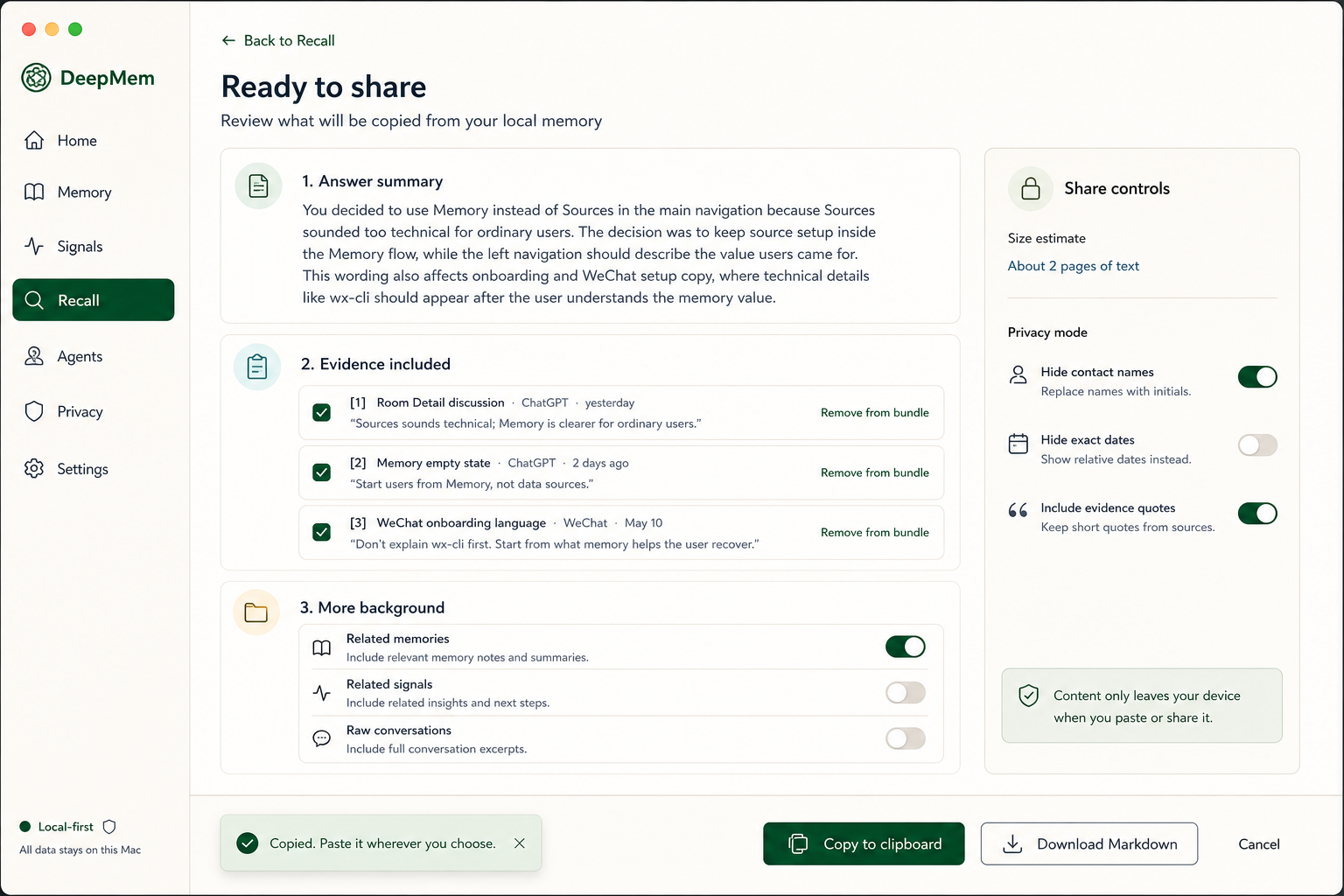
Recall answers with source-backed context. Before you copy or share anything, DeepMem shows the answer summary, included evidence, privacy controls, and what stays out.
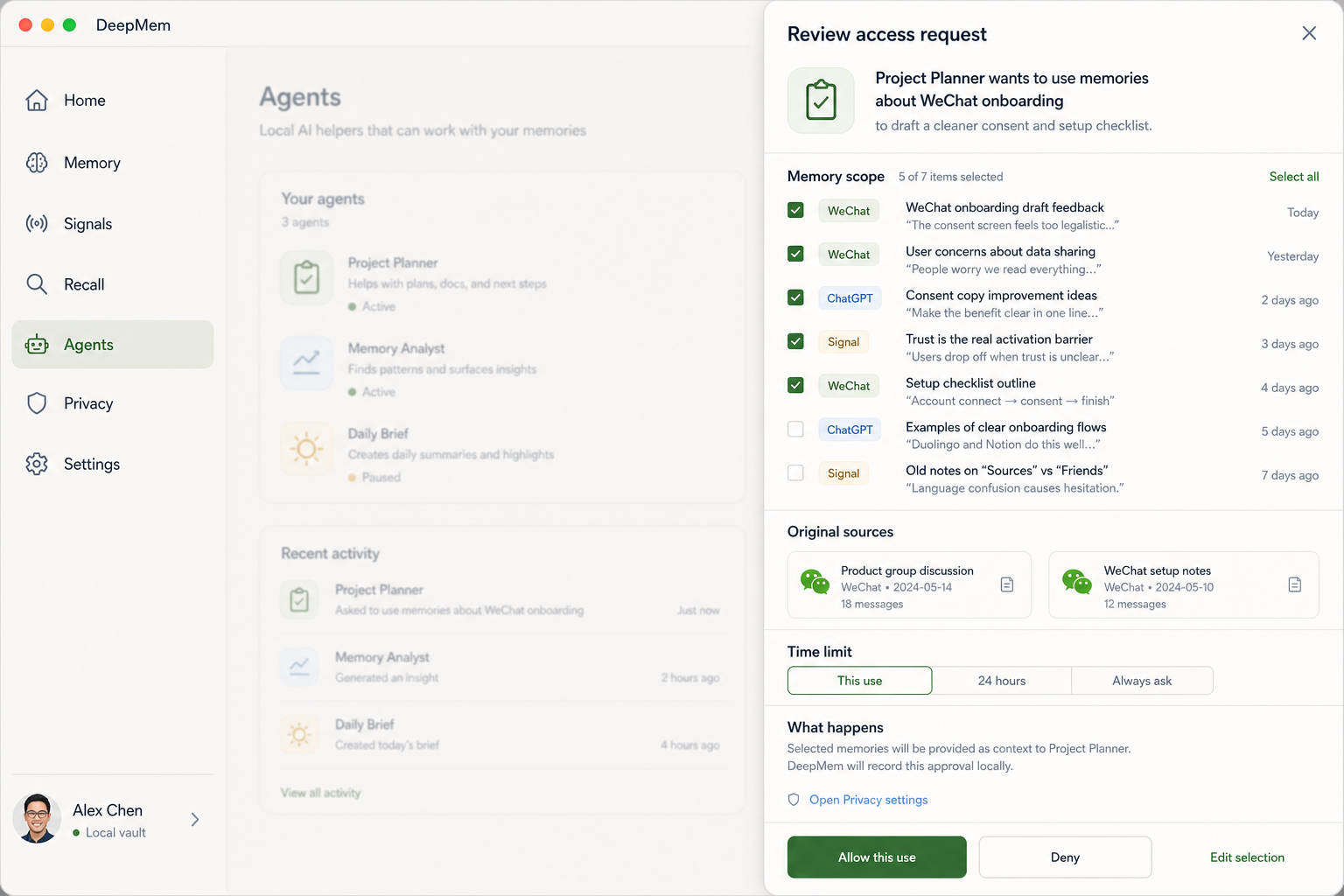
When a tool asks for memory, the grant review shows selected items, original sources, purpose, and time limit. You can allow one use, deny, or edit the selection.
DeepMem is designed for people who want their AI, social, and browser history back under their control before it becomes useful to them or to their agents.
Start with AI chat history and staged connectors for social and browser memory.
Captured records, indexes, and derived memory live on this computer by default.
DeepMem shows what it inferred, why it matters, and where it came from.
Query past decisions, preferences, procedures, and conversations with cited evidence.
Share selected snippets or signals for a purpose and time window, then revoke when needed.
The practical App remains the main product surface. Memory Palace and Soul Tree give DeepMem a more spatial way to inspect source wings, signal branches, and agent grants as your local memory grows.
AI chats, social history, browser trails, and clippings remain distinct sources instead of a flattened feed.
Facts, decisions, procedures, episodes, preferences, and relationships can be explored as structured memory.
Agent memory stays permissioned even inside the more visual mode.

The interface keeps privacy and review controls visible because personal memory includes private chats, browsing context, and social history.
The product direction keeps records, indexes, signals, and grant rules local unless you explicitly choose otherwise.
Signals and recall answers should point back to source snippets, timestamps, and conversations.
Tools request memory for a stated purpose; you approve, edit, deny, expire, or revoke grants.
Memory should remain editable and inspectable, not a black-box profile you cannot correct.
Get early access updates for the desktop app and help shape the signals, recall, and agent-grant workflow.
The first release is being built carefully. These answers describe the current product direction.
DeepMem is in active development. Join the waitlist for early access updates.
The product direction is local-first by default. Any future remote, sync, or cloud AI feature should be explicit and permissioned.
No. The site describes the product direction. Connectors will roll out gradually and stay labeled as early access, planned, or research.
Full local WeChat database history may require advanced local permissions. DeepMem will not make disabling SIP part of the default user path.